
About Dr Paul Worth
Consultant neurologist specialising in Parkinson's disease and movement disorders.


ABOUT DR WORTH
A leading consultant neurologist in the Midlands.
I am a Consultant Neurologist with a specialist interest in Parkinson’s disease, movement disorders, and related neurological conditions.
With more than 30 years of medical experience, I am dedicated to helping people receive accurate diagnoses, expert treatment, and personalised care for complex neurological symptoms.
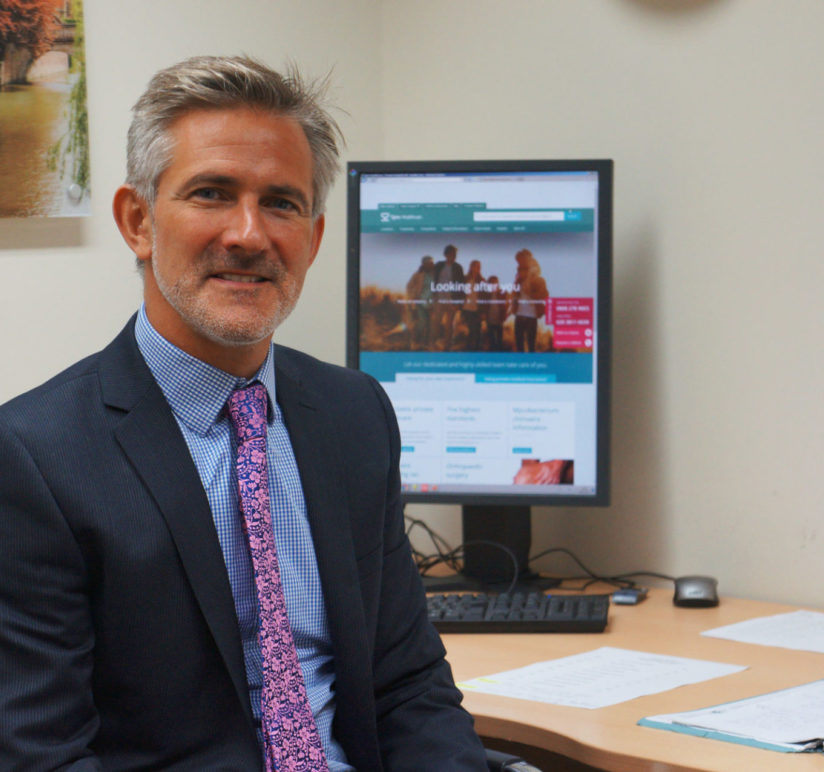
I currently care for around 500 people living with Parkinson’s disease across both my NHS and private practice.
Since 2004, I have assessed over 1,500 new patients in private practice.
My Training
My medical career began at the University of Cambridge, where I studied Medical Sciences and graduated with first-class honours in 1989. I then completed my clinical medical training at the University of Oxford, qualifying as a doctor in 1992.
Following my junior doctor training in general medicine, I undertook seven years of specialist neurology training at leading London teaching hospitals, including the National Hospital for Neurology and Neurosurgery — one of the world’s most respected centres for neurological care.
During my neurology training, I developed a particular expertise in Parkinson’s disease, movement disorders, and related conditions affecting mobility, coordination, tremor, stiffness, and involuntary movements. This includes the diagnosis and management of conditions such as Parkinsonism, tremor disorders, dystonia, and other complex neurological movement disorders.
To further advance my expertise, I completed a PhD at University College London, specialising in the genetics of movement disorders, helping deepen understanding of the causes and progression of neurological conditions, including Parkinson’s disease.
Today, I combine academic expertise with a patient-centred approach, supporting individuals with Parkinson’s disease and movement disorders through diagnosis, treatment planning, symptom management, and ongoing neurological care.
My Practice
After completing my specialist neurology training in 2004, I was appointed as a Consultant Neurologist at the Norfolk and Norwich University Hospital, where I established and developed a dedicated Parkinson’s disease service, supporting patients with diagnosis, treatment, and long-term management of Parkinson’s and movement disorders.
In 2013, I moved to Cambridge and was appointed as a Consultant Neurologist at Addenbrooke’s Hospital. Alongside my specialist work in Parkinson’s disease and movement disorders, I continue to provide expert assessment and treatment across a broad range of neurological conditions, including headaches, seizures, epilepsy, multiple sclerosis, stroke, and functional neurological disorders.
Over the years, I have continued to expand my expertise in the diagnosis and management of complex movement disorders, including dystonia, ataxia, tremor disorders, and atypical Parkinsonian syndromes. This includes specialist care for conditions such as progressive supranuclear palsy (PSP), multiple system atrophy (MSA), and corticobasal degeneration (CBD).
My approach combines specialist neurological expertise with personalised, patient-centred care, helping individuals better understand their symptoms, receive an accurate diagnosis, and access the most appropriate treatment and ongoing support for Parkinson’s disease and related movement disorders.
My Professional Timeline & Memberships
Matriculated at Trinity College, Cambridge
Elected senior scholar at Trinity College, Cambridge
Graduated with First Class Honours from Trinity College, Cambridge
Qualified as a doctor from University of Oxford Medical School
Membership of the Royal College Of Physicians (MRCP)
Began specialist training in neurology
Started PhD at University College London
Appointed consultant neurologist, Norfolk and Norwich University Hospital
Elected Fellow, Royal College of Physicians of London
Appointed to DeNDRoN Parkinson’s Clinical Studies Group
One of the first UK neurologists to use Duodopa to treat Parkinson’s
Appointed as DeNDRoN East Anglia Parkinson’s Specialty Lead
Appointed consultant neurologist, Addenbrooke’s Hospital, Cambridge
Elected to Council of Association of British Neurologists
Elected as Honorary Secretary, Association of British Neurologists Movement Disorders Special Interest Group
Appointed co-chair, Positive Steps in Parkinson’s annual conference
Appointed as Specialty Lead for neurological research, UK Clinical Research Network (Eastern)
Appointed Lead, Parkinson’s Excellence Network, Eastern

My Publications
Worth PF, Haining WN. (1990) Arabic, Persian & western medieval medicine. In: ‘A History of Medicine’ eds. Nancy Duin & Dr J. Sutcliffe. Morgan Samuel Editions.
Giunti P, David G, Worth PF, Stevanin G, Brice A, Wood NW (1999) Molecular and clinical study of 18 families with ADCA type II : evidence for genetic heterogeneity and de novo mutation. Am J Human Genet 64(6):1594-603
Worth PF, Giunti P, Gardner-Thorpe C, Dixon PH, Davis MB, Wood NW (1999) Autosomal Dominant Cerebellar Ataxia type III: Linkage of a large British family to a 7.6cM region on Chromosome 15q14-21.3. Am J Human Genet 65(2):420-6.
Worth PF, Houlden H, Giunti P, Davis MB, Wood NW (2000) Large expanded repeats in SCA8 are not confined to patients with cerebellar ataxia. Nat Genet 24(3):214-5
Worth PF, Wood NW. (2001) Genotype to Phenotype in the Spinocerebellar Ataxias. In: Malcolm S and Goodship J, editors. Genotype to Phenotype (2nd Ed). Oxford: BIOS Scientific Publishers: pp165-187
Worth PF, Brice A, Wood NW. (2001) Genotype-Phenotype correlation in the spinocerebellar ataxias. In: Harper PS and Perutz M, editors. Glutamine repeats and neurodegenerative diseases: molecular aspects. Oxford: Oxford University Press: pp221-236.
Sinha KK, Worth PF, Jha DK, Sinha S, Stinton VJ, Davis MB, Wood NW, Sweeney M, Bhatia KP (2003) Autosomal Dominant Cerebellar Ataxia (ADCA): SCA2 is the most frequent mutation in eastern India. J Neurol Neurosurg Psychiatry 75(3):448-52
Worth PF (2004) Sorting out Ataxia in Adults: a systematic approach to assessment and investigation. Practical Neurology 4(3):130-151
Worth PF, Stevens J, Lasri F, Brew S, Reilly MM, Rudge P, Mathias CJ. (2005) Syncope associated with pain as the presenting feature of neck malignancy: failure of cardiac pacemaker to prevent attacks in two cases. J Neurol Neurosurg Psychiatry 76(9):1301-3
Worth PF (2007) A perspective on the current issues in the diagnosis of Parkinson’s disease. Br J Hosp Med (Lond). 2007 May;68(5):S6, S8-11, S14-5.
Houlden H, Johnson J, Gardner-Thorpe C, Lashley T, Hernandez D, Worth P, Singleton AB, Hilton DA, Holton J, Revesz T, Davis MB, Giunti P, Wood NW. (2007) Mutations in TTBK2, encoding a kinase implicated in tau phosphorylation, segregate with spinocerebellar ataxia type 11. Nat Genet. 12:1434-6
Vijayan S, Wilkinson M, Worth P. (2009) Conducting Research within the NHS: A Guide for Medical Students and a Closer Look into the Ethical Approval Process. Reinvention: A Journal of Undergraduate Research. 2 (2)
Clarke CE, Worth P, Grosset D, Stewart D. (2009) Systematic review of apomorphine infusion, levodopa infusion and deep brain stimulation in advanced Parkinson’s disease. Parkinsonism Relat Disord 15(10):728-41
Daley DJ, Deane KH, Gray RJ, Worth PF, Clark AB, Sabanathan K, Pfeil M, Myint PK (2011) The use of carer assisted adherence therapy for people with Parkinson’s disease and their carers (CAAT-PARK): study protocol for a randomised controlled trial. Trials 12:251.
Giunti P, Houlden H, Gardner-Thorpe C, Worth PF, Johnson J, Hilton DA, Revesz T, Davis MB, Wood NW. (2012) Spinocerebellar ataxia type 11. Handb Clin Neurol. 103:521-34.
Worth P, Srinivasan V, Smith A, James I. Last JI, Wootton LL, Biggs PM, Davies NP, Carney EF, Byrd PJ, Taylor AMR. (2013) Very mild neurological phenotype in an adult with the classical cellular phenotype of ataxia telangiectasia. Mov Disord 28(4):524-8
Worth PF (2013) How to Treat Parkinson’s Disease in 2013 Clin Med. 13(1):93-6.
Worth PF. (2013) When the Going Gets Tough: How To Manage Patients with Advanced Parkinson’s Disease. Practical Neurology 13(3):140-52
Macphee GJ, Chaudhuri KR, David AS, Worth P, Wood B. (2013) Managing impulse control behaviours in Parkinson’s disease: practical guidelines. Br J Hosp Med (Lond) 74(3):160-6.
Németh AH, Kwasniewska AC, Lise S, Parolin Schnekenberg R, Becker EB, Bera KD, Shanks ME, Gregory L, Buck D, Zameel Cader M, Talbot K, de Silva R, Fletcher N, Hastings R, Jayawant S, Morrison PJ, Worth P, Taylor M, Tolmie J, O’Regan M; UK Ataxia Consortium, Valentine R, Packham E, Evans J, Seller A, Ragoussis J. (2013) Next generation sequencing for molecular diagnosis of neurological disorders using ataxias as a model. Brain 136(10):3106-18.
Daley DJ, Deane KH, Gray RJ, Clark AB, Pfeil M, Sabanathan K, Worth PF, Myint PK. (2014) Adherence therapy improves medication adherence and quality of life in people with Parkinson’s disease: a randomised controlled trial. Int J Clin Pract. 68(8):963-71.
PD Med Collaborative Group, Gray R, Ives N, Rick C, Patel S, Gray A, Jenkinson C, McIntosh E, Wheatley K, Williams A, Clarke CE. (2014) Long-term effectiveness of dopamine agonists and monoamine oxidase B inhibitors compared with levodopa as initial treatment for Parkinson’s disease (PD MED): a large, open-label, pragmatic randomised trial. Lancet 384(9949):1196-205.
Zis P, Martinez-Martin P, Sauerbier A, Rizos A, Sharma JC, Worth PF, Sophia R, Silverdale M, Chaudhuri KR (2015) Non-motor symptoms burden in treated and untreated early Parkinson’s disease patients: argument for non-motor subtypes. Eur J Neurol 22(8):1145-50.
Worth P. (2015) Results of the early stage PD MED study: revelation or recapitulation? Pract Neurol 15(6):408-10.
Malek N, Swallow DM, Grosset KA, Lawton MA, Marrinan SL, Lehn AC, Bresner C, Bajaj N, Barker RA, Ben-Shlomo Y, Burn DJ, Foltynie T, Hardy J, Morris HR, Williams NM, Wood N, Grosset DG; PRoBaND. (2015) Tracking Parkinson’s: Study Design and Baseline Patient Data. J Parkinsons Dis. 2015;5(4):947-59.
Ready to discuss your symptoms?
Book a private consultation with Dr Worth.